Another 2 AM Staring Contest with the Ceiling
The Cascade of Sleepless Destruction
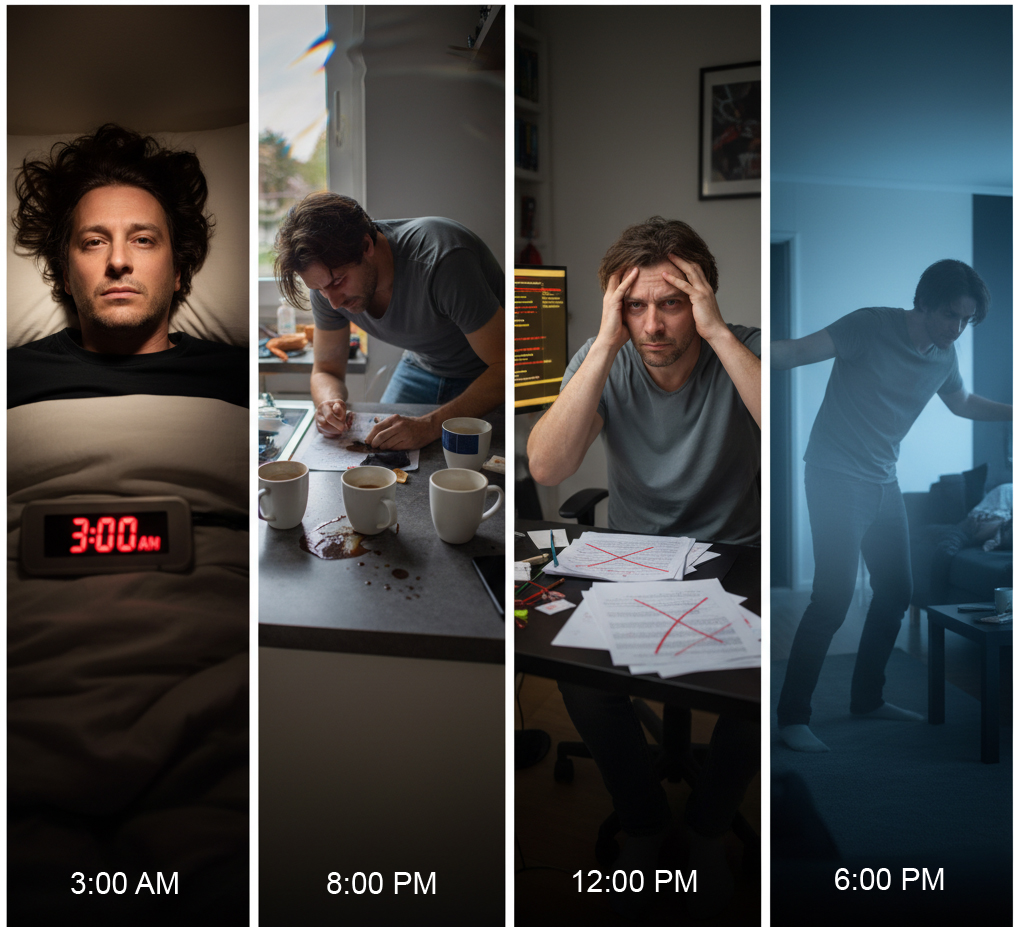
Insomnia doesn’t stay in the bedroom — it infiltrates everything:
- Your days are borrowed from your nights — running on fumes, powered by caffeine and desperation, crashing at 3 PM only to be wide awake at 3 AM
- Your mind becomes your enemy — the harder you try to sleep, the more alert you become, trapped in the cruel irony of desperate wakefulness
- Performance evaporates — mistakes at work, forgotten conversations, creativity replaced by fog, knowing you’re operating at 40% capacity
- Relationships suffer from your depletion — irritable, absent, too exhausted for connection, watching life happen through a haze
This isn’t about stress or bad habits. Your brain has forgotten how to power down, treating rest like a threat instead of a necessity.
When Good Sleep Habits Aren’t Enough
After decades working with chronic insomnia, I’ve learned that the people who try hardest to sleep often struggle most. Not because they’re doing something wrong, but because their brains have lost the ability to transition into rest naturally.
- Expertise in severe, chronic insomnia — including cases deemed “treatment-resistant”
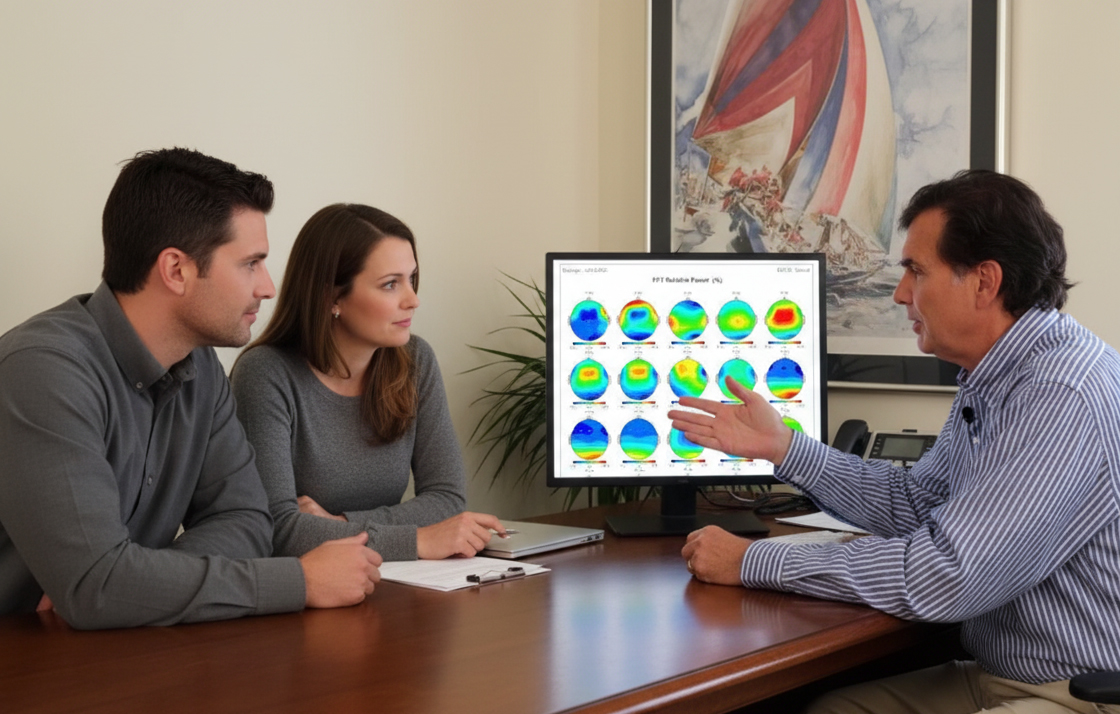
- QEEG mapping that shows why your brain won’t shut down — seeing the overactivity that keeps you wired
- Success without sleep medications — no dependency, no morning grogginess, no declining effectiveness
- Lasting resolution — not managing insomnia but eliminating it
“When clients see their brain map showing hyperactivity during rest, they finally understand — insomnia isn’t a character flaw or stress response. It’s a brain that needs to relearn how to sleep.”— Dr. Randy Cale
Teaching Your Brain to Power Down Naturally
We map your sleepless brain.
Your QEEG reveals which regions stay hyperactive when they should quiet down. Often, we see excessive fast-wave activity (beta waves) when your brain should be producing slow, restful waves. It’s like your brain is stuck in “daytime mode” 24/7.
We train the transition to rest.
Through neurofeedback, your brain practices shifting from alert to relaxed states. When it produces the slower waves associated with drowsiness and sleep, it receives positive feedback. Your brain literally relearns the pathway to sleep it’s forgotten.
Sleep becomes automatic again.
Not forced through exhaustion or medication, but natural — the way it was before insomnia rewired your nights. Your brain remembers how to recognize fatigue and respond with sleep instead of alertness.
Sleeping Like You Were Meant To
Most clients experience dramatically improved sleep within 3-4 weeks. Not just falling asleep faster, but staying asleep, reaching deep restorative stages, and waking actually refreshed. Your brain relearns that nighttime means rest, not vigilance.
Real Stories: The Executive Whose Brain Refused to Rest
Michael, 42
Michael’s brain had learned to be hypervigilant during a stressful period at work five years earlier. The crisis had passed, he’d gotten a promotion, his life was good. But his brain was still scanning for threats at 2 AM.
“I know there’s nothing to worry about. But knowing doesn’t seem to matter.”
His brain map showed exactly what was happening — areas responsible for vigilance and alertness were working overtime, even during rest. It was like having a security guard who refused to take a break.
After two months of neurofeedback training, Michael’s brain learned it was safe to power down at night. The security guard finally learned to trust that the building was secure.
“I forgot what it felt like to wake up rested. I didn’t realize how exhausted I’d been for years.”

What Life Feels Like With a Brain That Knows How to Rest
Imagine your nervous system remembering its natural rhythm:
- Fall asleep within minutes — your brain recognizes tired and responds with sleep, not alertness
- Stay asleep all night — deep, restorative stages that actually repair and restore
- Wake naturally refreshed — no alarm warfare, no snooze battles, just ready
- Think clearly all day — sharp focus, quick recall, creative problem-solving returns
- Handle stress without crashing — challenges don’t trigger sleepless spirals
- Trust tomorrow — going to bed knowing you’ll actually sleep, not perform another failed experiment
“My sleep is better. My mood overall is fantastic. I experience comfort and ease in my body, which I didn’t even know I could do before.” — Leslie, 34
What Makes ADHD Brains Different (And Often Brilliant)
Brain mapping consistently reveals that adults with ADHD don’t lack intelligence or capability — they lack consistent access to their abilities. The same brain that hyperfocuses for eight hours on fascinating problems can’t maintain attention for five minutes on mundane tasks. It’s not about trying harder. It’s about training your brain to choose its gears.
Evidence-Based. Drug-Free. Restorative.
Research confirms neurofeedback resolves chronic insomnia by training the brain to produce appropriate sleep-wave patterns and quiet hyperactive regions that prevent rest.
Why it works where sleep medications fail:
- Addresses the source — retrains overactive brain regions, not sedation
- No dependency — unlike sleep meds that lose effectiveness and create reliance
- Natural sleep architecture — promotes all sleep stages, not just unconsciousness
- Permanent resolution — your brain relearns how to sleep on its own
When your brain remembers how to transition from waking to sleeping naturally, insomnia becomes a distant memory instead of a nightly battle.
The Choice Point
Every night you can move toward restoration or deeper exhaustion. The path forward starts now.
Each Week of Training Builds Your Sleep Foundation
When you begin neurofeedback for insomnia:
- First 1-2 weeks: Falling asleep becomes slightly easier, less mental racing
- Week 3-4: Fewer middle-of-the-night wake-ups, deeper sleep periods
- Month 2: Consistent sleep patterns emerging, waking more refreshed
- Month 3-6: Sleep becomes reliable and restorative — what everyone else takes for granted
“After 15 years of insomnia, I slept through the night in week three. I cried the next morning — happy tears.” — Michael, 42
The Accumulating Cost of Lost Sleep
Without addressing the neurological cause:
- Cognitive decline accelerates — memory, focus, and decision-making deteriorate
- Health consequences compound — increased risk of heart disease, diabetes, weakened immunity
- Medication tolerance builds — higher doses, multiple prescriptions, declining effectiveness
- Years of life half-lived — existing in perpetual fog instead of thriving
Every sleepless night steals from tomorrow. Every exhausted year compounds the debt. Your brain needs to relearn rest before the cost becomes permanent.
Your Next Step: Reclaim Your Nights, Restore Your Life.
You’ve tried all the standard advice — no screens before bed, same sleep schedule, cool dark room, meditation apps, supplements, medications. You’ve done everything “right” and still lie awake. That’s because insomnia isn’t about what you do — it’s about what your brain has forgotten how
Let’s map your brain and rebuild your pathway to natural, restorative sleep.