Trapped by the Next Attack: The Silent Fear That Rules Your Life
Living in Constant Preparation for Disaster
Panic disorder isn’t just about panic attacks — it’s about the life you build around avoiding them:
- Every exit mapped, every escape route planned — restaurants need doors you can see, meetings need aisle seats, highways become impossible
- Your body is the enemy — constantly checking your pulse, analyzing every sensation, wondering if this flutter means another attack
- The ER knows you by name — multiple visits, same tests, same result: “nothing physically wrong”
- Relationships strain under the weight — canceling plans last minute, leaving events early, partners who don’t understand why you can’t “just relax”

Understanding the Neurology of False Alarms
After 30 years working with panic disorder, I’ve learned something crucial: people who panic aren’t anxious personalities — they’re people whose brains learned a faulty emergency response, often after a single triggering event.
- Thousands of panic-free outcomes documented through brain mapping and training
- Specialized protocols for panic disorder that target the specific neural misfiring patterns
- Experience with severe cases — from agoraphobia to 10+ daily panic attacks
- Evidence-based approach that doesn’t rely on willpower or coping strategies
Teaching Your Nervous System the Difference Between Real and False Danger
First, we decode the pattern.
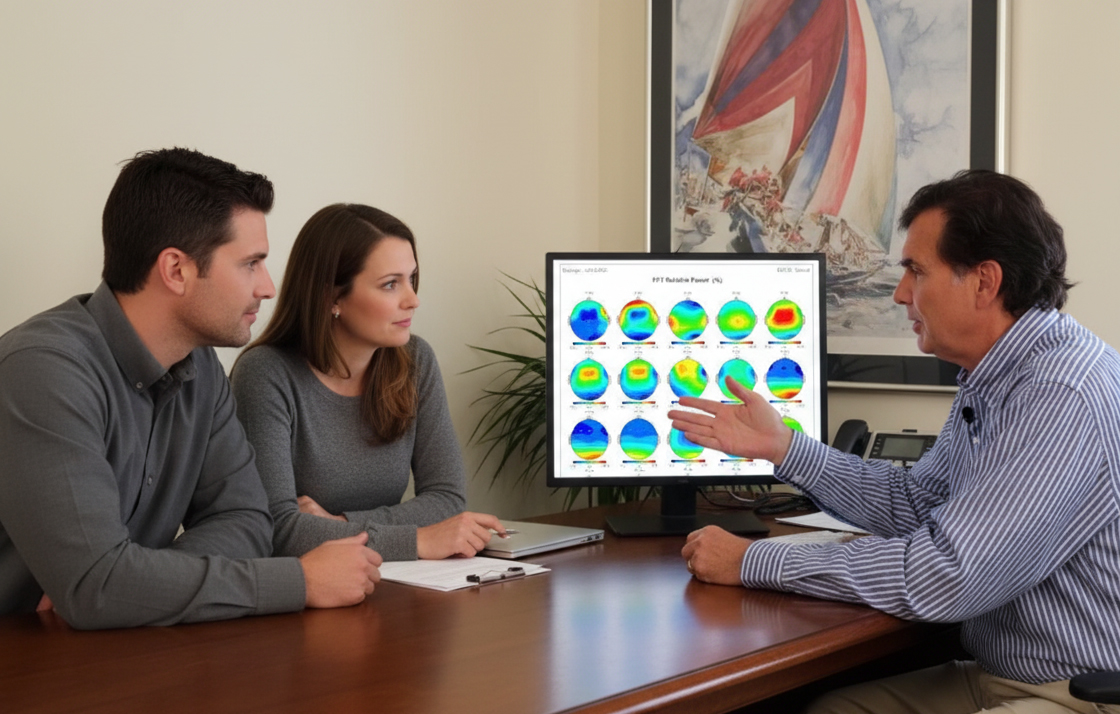
Your QEEG brain map reveals why your nervous system can’t distinguish between a crowded store and a genuine threat. We see exactly which circuits are triggering unnecessary emergency responses and which calming mechanisms aren’t engaging properly.
Then, we retrain the response.
Through precise neurofeedback protocols, your brain practices staying calm when calm is appropriate. Each time your nervous system chooses regulation over alarm, that choice gets reinforced. It’s like teaching your smoke detector the difference between burnt toast and a real fire.
Finally, you reclaim your life.
Panic attacks don’t get “managed better” — they stop occurring. Your nervous system remembers how to accurately assess situations. That racing heart becomes just exercise. That dizzy spell is just standing up too fast. Nothing more.
From Surviving to Living
Most clients have their last panic attack within 8-12 weeks. After that, your nervous system stops creating them. No managing, no coping strategies, no rescue meds — just living normally again.
Book Your Free Consultation
Speak directly with Dr, Cale
Real Stories: From Panic Prison to Freedom
Barbara, 28: When Every Interaction Triggered Physical Panic
Barbara’s panic attacks weren’t random — they were social. Every conversation could trigger a racing heart, sweating, the certainty that everyone could see her falling apart. She’d avoid social situations for fear of panic, then panic about being isolated.
“I’d feel my chest tighten just standing near people in a store. My body would go into full alarm mode for no reason.”
After neurofeedback: “That physical discomfort isn’t there anymore. I can be around people without my body attacking me. I have my life back. I actually look forward to social plans now instead of dreading them.”

Remember Who You Were Before Fear Moved In?
That person still exists. Here’s what they’re doing now:
- Booking travel without dread — vacation planning is exciting again, not terrifying
- Sitting in traffic peacefully — bridges and tunnels are just infrastructure, not trapped spaces
- Feeling emotions without fear — excitement doesn’t get misread as panic
- Working out hard — your heart can race from exercise without triggering alarm
- Living spontaneously — yes to dinner invitations, concerts, last-minute adventures
- Trusting tomorrow — going to bed knowing you’ll wake up okay
“Six months ago, I couldn’t leave my neighborhood. Yesterday I flew across the country. Alone. And enjoyed it.” — Marcus, 38
The Neuroscience Behind Your Panic
QEEG brain mapping reveals the dysregulation driving panic attacks. Multiple brain regions show irregular patterns — overactive fear centers, underactive calming mechanisms, and poor communication between systems that should work together.
These patterns developed over time as your brain learned to treat normal situations as emergencies. But what the brain has learned, it can relearn. Through neurofeedback training, your brain practices healthier patterns until they become automatic.
The result: your nervous system stops creating panic attacks. Not because you’ve learned to manage them better, but because the neurological conditions that created them no longer exist.
One Brain. Many Symptoms. How Neurofeedback Helps With Conditions.
Evidence-Based. Drug-Free. Lasting.
Dozens of research studies confirm that neurofeedback helps reduce obsessive thoughts and compulsive behaviors by improving self-regulation and brain flexibility.
Why it works where other treatments fail:
- Addresses the source — fixes misfiring alarm systems, not just symptoms
- No side effects — unlike medications that create dependence or withdrawal
- Builds resilience — each session strengthens your nervous system’s stability
- Creates autonomy — no lifelong management or coping strategies needed
When your nervous system relearns the difference between real and false danger, panic loses its power to control your life.
Train Calm — or Strengthen Fear. The Choice Is Yours.
Neurofeedback helps your brain unlearn panic’s false alarms before they tighten their grip. Start now, while calm is still easier to reclaim.
Every Day Without Panic, Your World Gets Bigger
When you start neurofeedback for panic disorder:
- Relief often begins within 2-3 weeks — the first time you feel a sensation without spiraling into panic, you know something’s changing
- Each session builds confidence — your brain learns to stay calm in situations that used to trigger attacks
- Your comfort zone expands naturally — places you’ve avoided for years become accessible again
- You reclaim lost years — imagine the next decade lived fully, not spent managing fear
“I wish I’d found this before I spent 10 years afraid to leave my house. But I’m grateful I found it — I have my whole life ahead of me now.” — Robert, started neurofeedback at 43
But Every Panic Attack Makes the Next One More Likely
Without addressing the brain directly:
- The fear network strengthens — each panic attack reinforces your brain’s faulty alarm system
- Avoidance grows — first highways, then stores, then anywhere you’ve panicked before
- Medication dependency deepens — benzos for emergencies become daily necessities
- Your life gets smaller — until panic disorder becomes panic prison
The good news? Even severe panic disorder can be retrained. The key is starting before more of life gets stolen.
Your Next Step: Silence the False Alarms. Reclaim Your Life.
You don’t have to live at the mercy of random panic attacks or spend your life avoiding triggers. Real change starts with understanding what’s happening in your brain — and training it to stop sounding false alarms.
Take the first step today. Your body can be a safe place to live again.
Schedule Free Consultation with Dr. Cale See Success Stories