You Know Your Child Is Smart… So Why Is Learning Such a Struggle?

Falling Behind, Losing Confidence, Feeling Alone
When learning feels harder than it should, kids notice — and so do their peers. Struggles with reading, writing, or staying focused often lead to:
- Tearful mornings before school
- Bedtimes filled with fear instead of rest
- Stomachaches, headaches, or endless “what ifs”
- Meltdowns that come out of nowhere
You’ve tried reassurance, reasoning, maybe even therapy — but nothing seems to stick. Instead of peace, you’re left with exhaustion and frustration, wondering if anything will ever change.
Traditional Approaches Don’t Bring Lasting Relief
Medication and quick fixes may help temporarily, but they don’t solve the underlying problem. Here’s why so many families feel stuck:
Tutoring Teaches Workarounds, Not Lasting Skills:
- Helps with specific subjects or test prep
- Provides temporary grade improvements
- Doesn’t correct the underlying brain inefficiencies
- Confidence slips when struggles return
Medication Improves Focus, Not Learning:
- May help children sit still or pay attention
- Doesn’t train the brain to process information more effectively
- Side effects can reduce energy and motivation
- Struggles often return once medication wears off
Progress Stalls — and Kids Fall Further Behind
Extra help fills gaps. Medication masks symptoms. But underneath, your child’s brain is still working harder than it should to focus, absorb, and remember.
So despite hours of tutoring and countless strategies, progress is fragile. Kids fall behind again, confidence crumbles, and parents are left frustrated, wondering if anything will truly make a difference.
Neurofeedback goes deeper than tutoring — it trains the brain itself to learn more easily, naturally, and with confidence.
- Addresses the root cause — instead of drilling facts or skills, it strengthens the brain networks responsible for focus, memory, and learning.
- Creates lasting results — progress builds as the brain learns healthier patterns, rather than fading when tutoring ends or medication wears off.
- Restores motivation — as learning becomes easier, kids regain interest in schoolwork and begin to believe they can succeed.
- Builds self-esteem — when children experience real progress, their confidence grows — and so does their willingness to try.
With neurofeedback, learning doesn’t just get easier — it finally feels possible.
From Struggles in the Classroom to Confidence at School
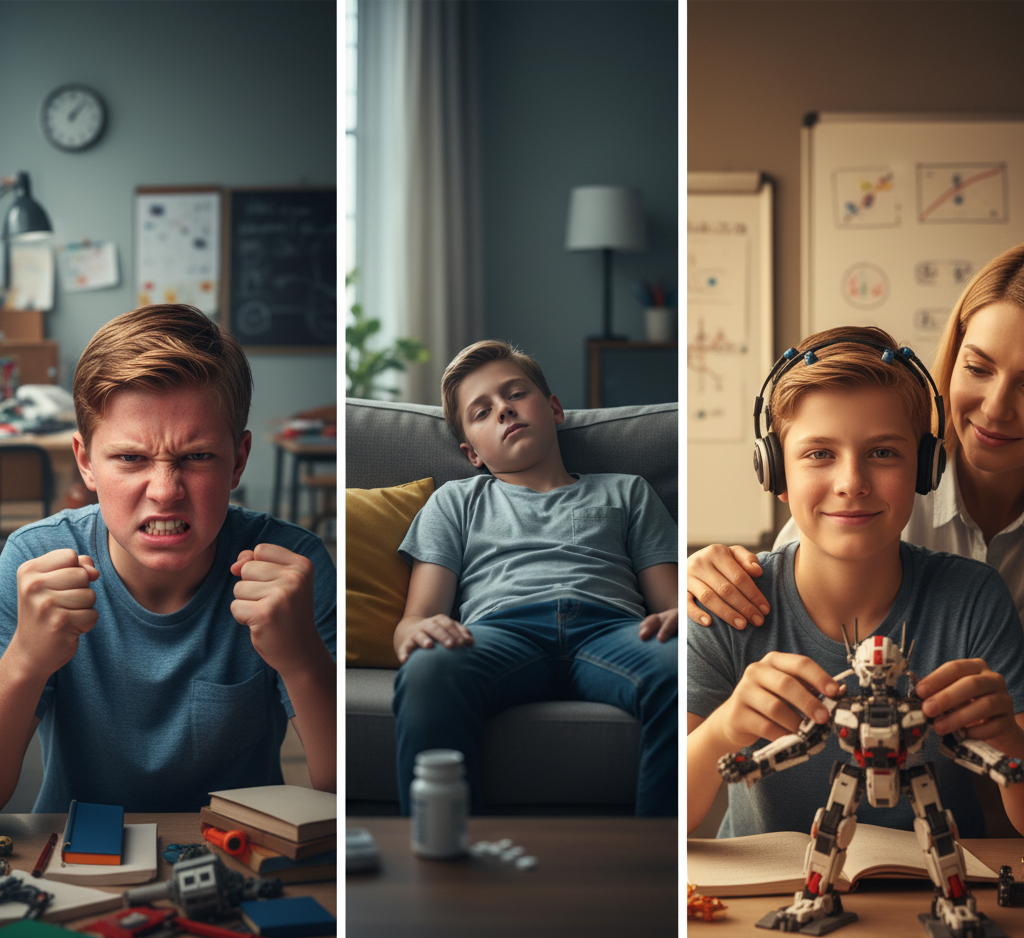
Richard’s Story — From Anger and Struggles to Focus and Calm
Richard, age 14, was bright but his emotions ruled his life. At school and at home, he went from zero to a hundred in anger within seconds. Traditional medications only left him exhausted and didn’t solve the problem.
After starting neurofeedback, his mom noticed changes within weeks:
- Aggression dropped dramatically
- Conversations replaced yelling
- Teachers and coaches began commenting on his politeness and focus
Most importantly, Richard was able to stop taking medication — and his mom finally felt hopeful about his future.
“We went from constant aggression to pure conversations. I’m so happy and hopeful and proud of him now.”
Glenn’s Story — ADHD Athlete Finds Focus and Leadership
Glenn, age 17, was a talented BMX athlete with ADHD that made daily life and schoolwork a constant battle. He cycled through medications that drained his energy and joy for competition.
With neurofeedback, everything shifted:
- He transitioned off medication smoothly
- Managed his schoolwork and schedule independently
- Became a role model for younger athletes, showing leadership and responsibility
- Glenn not only regained his focus but found confidence — both in the classroom and on the competition field.
“He’s now become the role model for some of the younger kids… The changes were just incredible.”

The Science That Maps the Brain and Guides Every Step
Every child begins with a QEEG brain map (quantitative EEG). This advanced assessment reveals where brain activity is underperforming or “misfiring,” making it difficult to learn, concentrate, and follow through. With that insight, we design a personalized neurofeedback training plan. As sessions progress, the brain builds new, stronger patterns that support focus and learning.
Proven. Safe. Transformational.
Dozens of research studies confirm that neurofeedback helps children overcome learning and focus challenges.
Parents trust it because it is:
- Non-invasive — no drugs, no side effects
- Research-backed — supported by decades of clinical evidence
- Long-lasting — changes hold because the brain learns new patterns
- Child-friendly — kids often enjoy the sessions and look forward to them
With neurofeedback, children don’t just “try harder” — they gain the ability to learn, focus, and succeed with confidence that lasts.
Your Next Step: Hope Starts Here
You don’t have to keep watching your child struggle with learning, focus, and confidence. Neurofeedback can help unlock their potential — and give your family the relief you’ve been searching for.