FOR ADULTS LIVING WITH ADHD OR CHRONIC DISTRACTIBILITY
You Are Capable. So Why Is It Still So Hard to Stay on Track?
You can be creative, capable, and highly productive – then lose the thread, underestimate time, or finish the day wondering what you actually completed. We begin by understanding your history and goals, then use a brain map to help guide a personalized neurofeedback plan.
Still working harder than it should take? Let’s find a clearer path forward.
You may focus intensely when something is interesting or urgent, yet struggle to direct that same attention toward routine tasks. The issue is often not ability. It is getting attention to show up consistently when you need it.
Common goals for individualized neurofeedback training:
To focus and complete tasks.
To remain attentive to important conversations and content.
Staying with an important task after the novelty fades.
Shifting attention without losing your place.
Starting sooner with less dependence on last-minute urgency.
Following though after the initial burst of energy.
These are training goals, not promises. The brain map helps identify which targets may be relevant for you.
We Don’t Guess. We Brain-Map First
ADHD is one part of the picture. Your history, daily patterns, goals, and response to prior treatment matter too. A qEEG brain map adds information about patterns of brain activity that may help guide training. We use that information to develop an individualized plan and review progress with you.
A brain map informs the plan. It does not diagnose ADHD on its own.
How Neurofeedback Works
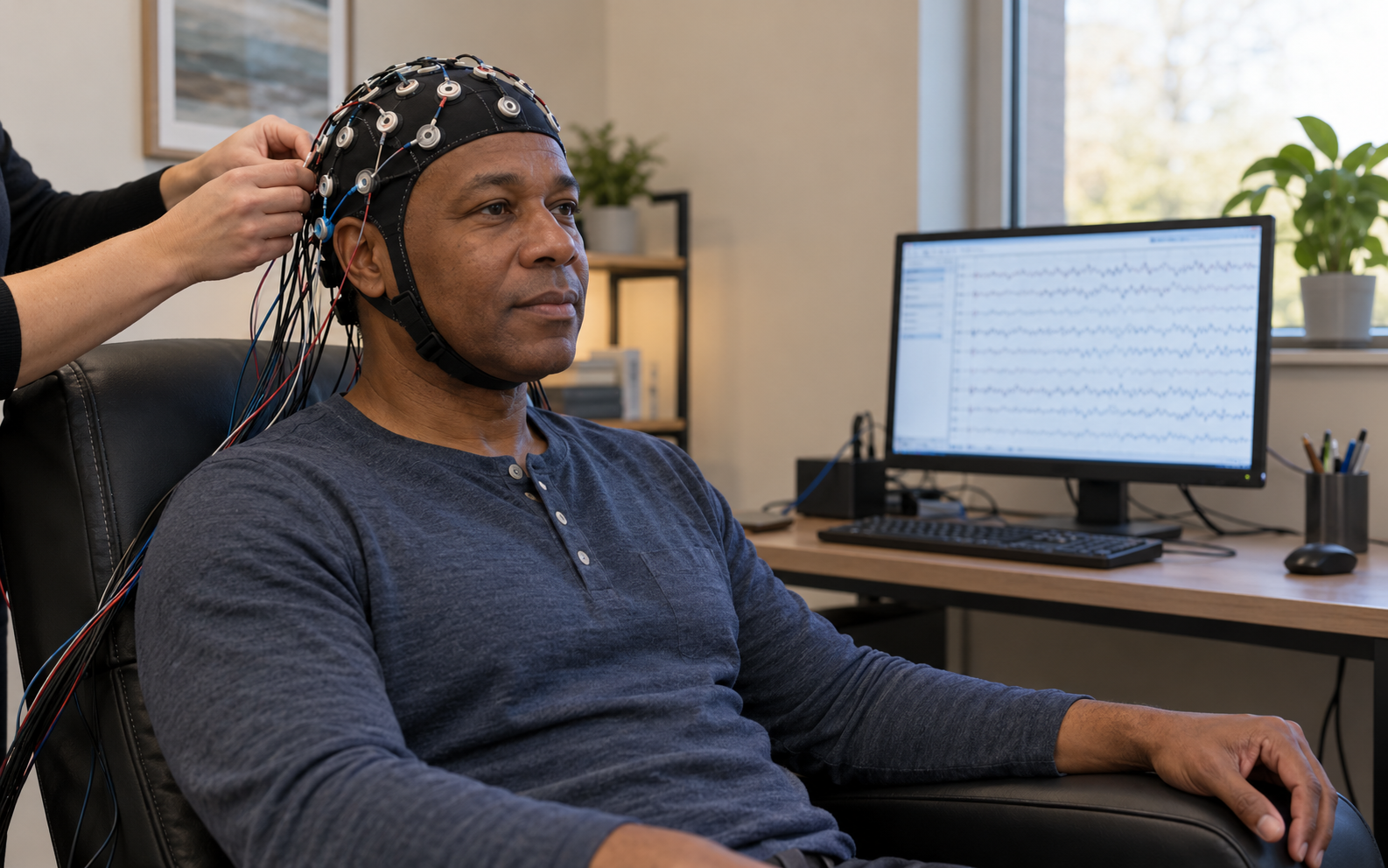
Neurofeedback gives the brain immediate feedback during training. Sensors measure brain activity, and changes in sound or screen brightness signal when selected patterns move forward the training goals. That feedback is the change agent: it gives the brain information it can learn from through repeated practice.
Sensors measure activity: they do not send electricity into the brain.
Training goals are individualized for your history, goals, and brain-map findings.
Most client trains at home: with office training also available.
WHAT HAPPENS NEXT
Your Clear Path Forward
From brain map to guided training, with support at each step.
1Brain Map
Review your history, goals, and patterns of brain activity.
2Personalized Plan
Choose training targets connected to attention, task, initiation, follow-through, and regulation.
3Train with Guidance
Train at home or in the office, with guidance and regular progress reviews.
What Our Clients Have Shared
These are individual personal experiences. Results vary.
40 Years of Clarity
STEVE : “I could actually be happy in this lifetime.”
An Adult’s Experience
KELLY : “I would not be where I am today.”
Questions Adults Often Ask
Do I need a formal ADHD diagnosis?
Not necessarily to have a conversation. A diagnosis is a separate clinical process. The consultation will help determine whether neurofeedback, further evaluation, or another step make sense.
Does the qEEG diagnose adult ADHD?
No! It adds information about patterns of brain activity that is relevant to neurofeedback training. It is considered alongside your history, symptoms, and goals.
Can I continue medication, therapy, or coaching?
Often, yes. We can discuss how training fits with your current care. Medication decisions remains with the prescribing clinician.
Can I train at home?
Many adults train at home with professional guidance. Office training is also available. The best setting depends on goals, protocols, equipment, and the ability to train consistently.
What happens during the free consultation?
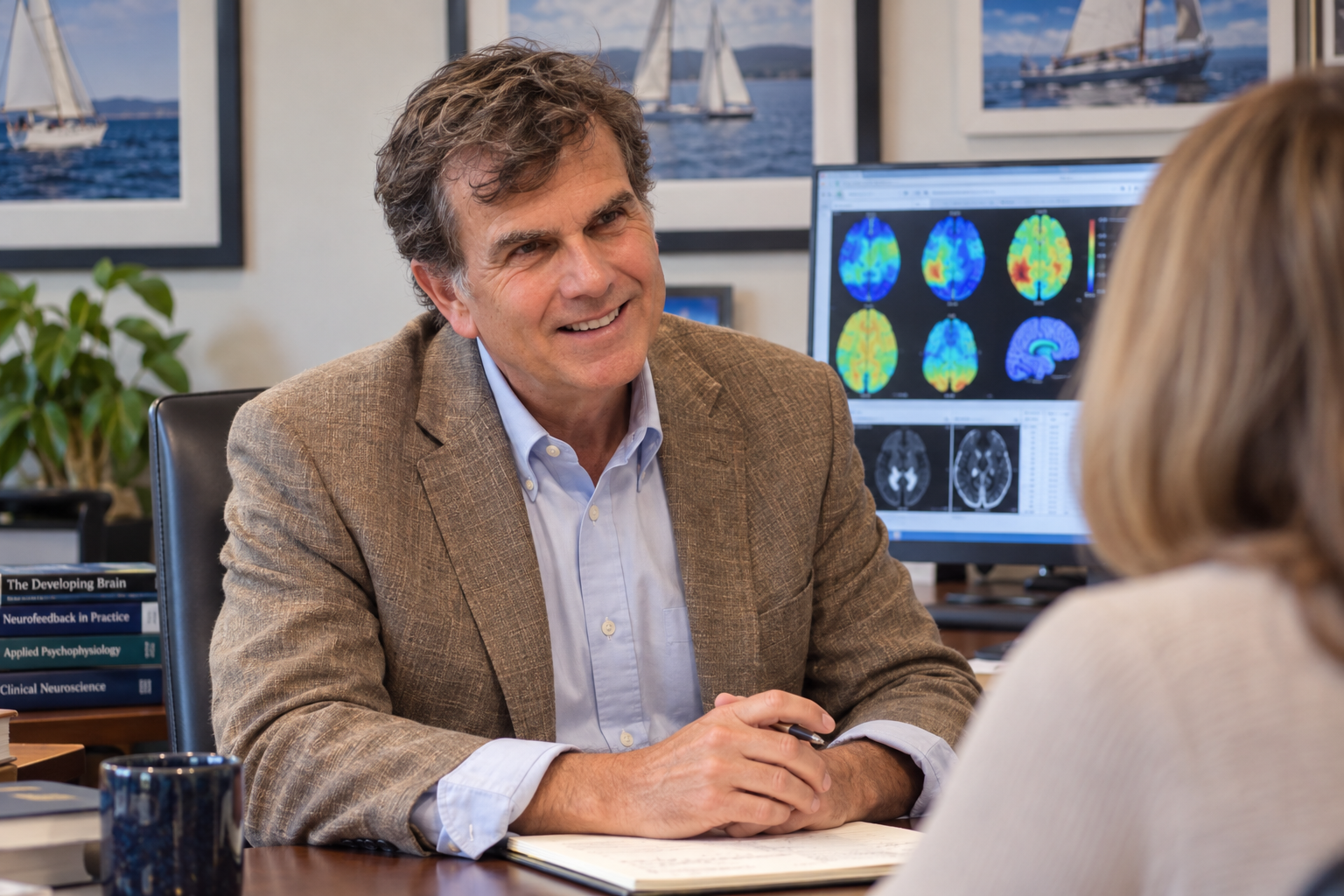
You speak directly with Dr. Cale about current challenges, previous efforts, and practical goals. Together, you can consider whether brain mapping, neurofeedback, or another next step make sense.
A Clearer Next Step
What would steadier focus, better follow-through, and less time spent fighting yourself mean in daily life? A free consultation is a chance to discuss what has been happening, what you have already tried, and whether our approach is a reasonable next step.
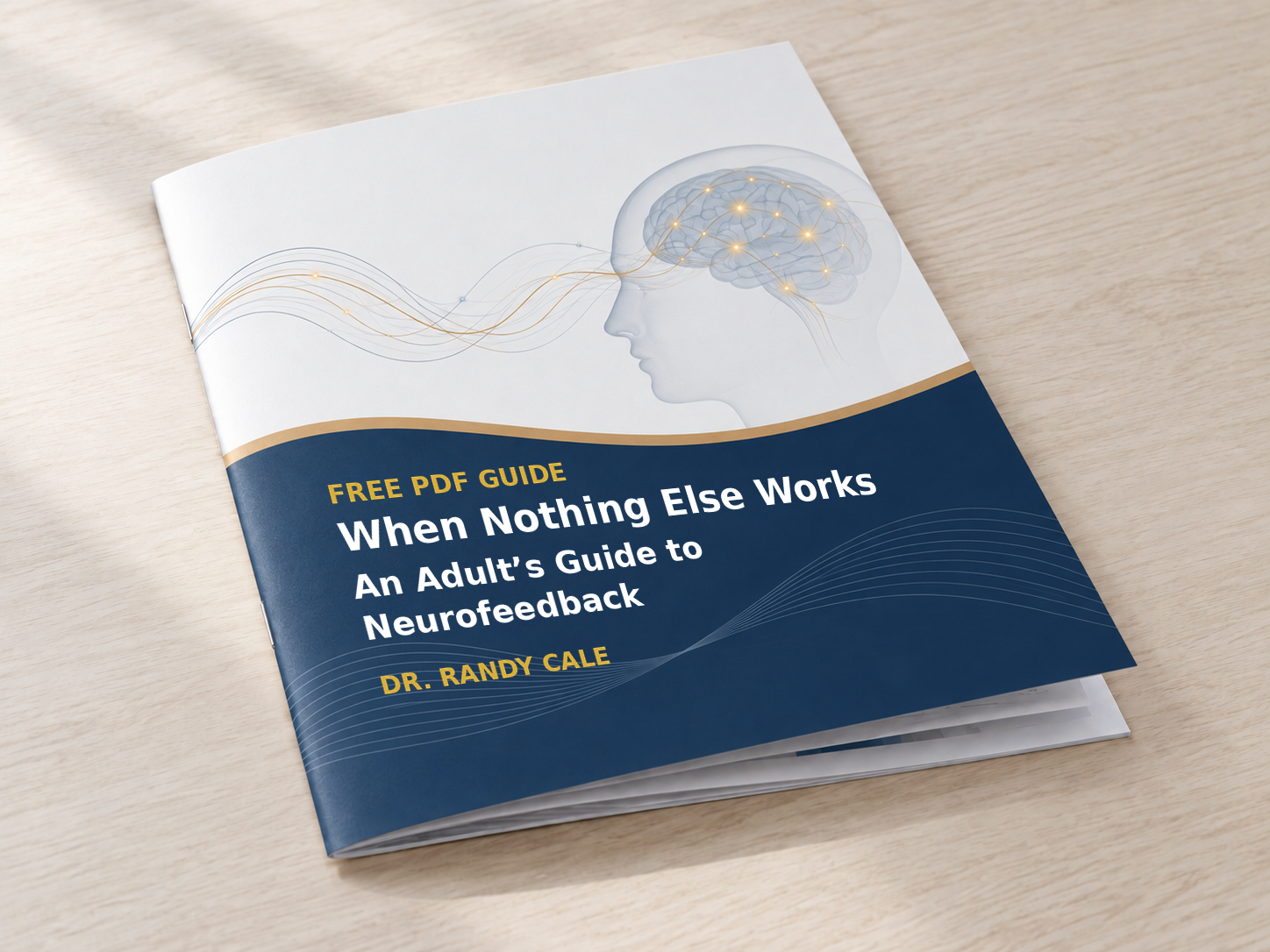
Learn how neurofeedback can help you or your loved ones. Download Dr. Cale’s eBook that explains how neurofeedback operates in easy-to-understand terms. Individuals of all ages share their stories about the benefits of working with Dr. Cale, and how seeking treatment has made a difference in their child’s and their own lives!
If you are an Adult looking for your best solution CLICK HERE
If you are a Parent looking for a better solution for your child, CLICK HERE



 NOT READY TO SCHEDULE?