
Psychogenic Non-Epileptic Seizures, often called PNES, are far more common than most people realize. Many individuals spend months or years searching for answers, often being told their symptoms do not “fit” typical epilepsy. That can feel confusing, frightening, and deeply invalidating.
At Capital District Neurofeedback, Dr. Randy Cale, a licensed psychologist and neurofeedback specialist, and our clinical team work with individuals whose symptoms have often been misunderstood, minimized, or treated only from the outside in. With PNES, that distinction matters. These episodes are not imaginary. They are not “made up.” And they are certainly not a sign that someone is weak, dramatic, or looking for attention.
PNES is real. The symptoms are real. The suffering is real. And while these seizures are not caused by the same electrical misfiring seen in epilepsy, that does not make them any less serious. Instead, PNES often points to a brain and nervous system that have become overwhelmed, unstable, and dysregulated.
This is where a brain-based approach can offer new hope. Rather than simply talking about the symptoms or trying to suppress them, QEEG-guided neurofeedback helps us better understand how the brain is functioning and where it may be struggling to regulate. From there, the goal is to help the brain learn a more stable, flexible, and resilient pattern over time.
How PNES Is Different From Epileptic Seizures?
Epileptic seizures are caused by abnormal electrical activity in the brain. PNES episodes, by contrast, are not driven by the same epileptic brain discharge. Instead, they are often understood as the nervous system’s unconscious response to stress, trauma, emotional conflict, anxiety, or prolonged physiological overload.
While not well understood psychologically, we could think of PNES in this way: the brain/body finds relief in expressing distress in a physical manner. The body speaks what the mind may not yet be able to process.
This does not mean the person is choosing the seizures. It does not mean they can simply calm down and make them stop. Anyone who suggests that probably also thinks telling a drowning person to “just swim better is a treatment plan.
PNES reflects a nervous system that has lost its footing. And unfortunately, these physical expressions can develop into brain patterns that become somewhat ‘locked’ over time.
The work, then, is to help the brain and body abandon those patterns and regain stability.
What Can Contribute to PNES?
There is rarely one simple cause. PNES may develop after trauma, grief, abuse, accidents, medical illness, chronic stress, relationship disruption, or years of emotional strain. In some individuals, PNES appears alongside PTSD, anxiety, depression, panic symptoms, or dissociation. In others, the connection is less obvious at first.
Sometimes the body has been carrying stress for so long that the person no longer recognizes it as stress. It has become the water they swim in. Eventually, the nervous system says, “Enough,” but it does not always say this politely.
That is when symptoms can emerge.
Why Traditional Treatment Can Feel So Frustrating
Many people with PNES have already been through the medical maze. They have seen physicians, neurologists, therapists, and specialists. Along the way, they may have been offered medications for anxiety, depression, sleep, mood, or stress. Sometimes these help. But often, they bring side effects without truly addressing the deeper pattern of brain and nervous system dysregulation.
Even more painful, many clients have been quietly or openly dismissed with some version of, “It’s all in your head.” And while technically the brain is involved, that phrase usually lands as: You are making this up. You are exaggerating. This is not real. Nothing could be further from the truth.
PNES is not fake. It is not pretend. It is not attention-seeking. These episodes are real physical events, often reflecting a nervous system that has become overwhelmed, unstable, and dysregulated. The body is not lying. The brain is not “making trouble for fun.” This is not a toddler with a drum set. This is a brain and nervous system struggling to regulate under stress.
Traditional therapy can certainly be helpful, especially when trauma, anxiety, or emotional overwhelm are involved. But many people with PNES have already spent months or years talking about their symptoms without seeing those symptoms change. The missing piece is often this: talking about the brain is not the same as training the brain.
A better approach begins with respect. The symptoms are real. The suffering is real. The nervous system is dysregulated. And with the right kind of brain-based training, improvement is possible.
How Neurofeedback May Help
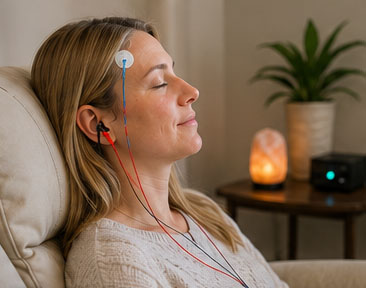
Neurofeedback is a non-invasive form of brain training that helps the brain learn to regulate itself more effectively. At Capital District Neurofeedback, Dr. Randy Cale and our clinical team use QEEG brain mapping to identify patterns of dysregulation that may be related to arousal, anxiety, trauma response, instability, or difficulty calming the nervous system.
During neurofeedback sessions, the brain receives real-time feedback through visual or auditory cues. Nothing is forced into the brain. There is no medication involved. Instead, the brain is shown its own activity and gently rewarded when it moves toward healthier, more stable patterns.
Over time, this can help support better emotional regulation, calmer stress responses, improved sleep, and greater nervous system resilience. For individuals with PNES, this matters because the goal is not merely to “think differently.” The goal is to help the brain and body stop living in emergency mode.
In our practice, we have seen encouraging results with clients struggling with non-epileptic seizures, including meaningful reductions in seizure frequency for some individuals. Of course, no treatment can promise the same result for every person. But when the brain is dysregulated, and when that dysregulation is part of the problem, neurofeedback gives us a direct way to help the brain learn a better pattern.
Neurofeedback is not a magic wand. Sadly, we are still waiting for those to become insurance reimbursable. But it can be a powerful tool, especially when combined with trauma-informed therapy, stress regulation skills, breathing practices, lifestyle changes, and appropriate medical oversight.
A More Hopeful Way Forward
If you or a loved one has been diagnosed with PNES, please hear this clearly: you are not broken. You are not faking. And you are not out of options.
PNES often reflects a nervous system that has, for whatever reason, developed a pattern for coping that is no longer useful — at least not now. The path forward is not to give up hope, and it is certainly not to place blame or guilt in any direction. The path forward is regulation, healing, and helping the brain retrain toward greater stability.
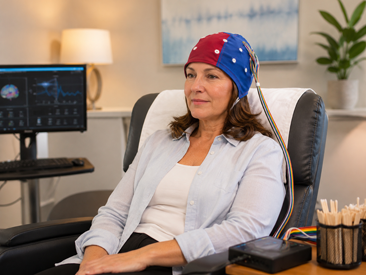
At Capital District Neurofeedback, our team uses QEEG-guided neurofeedback to better understand each individual brain and develop a training plan based on that person’s unique patterns. For those struggling with non-epileptic seizures, trauma symptoms, anxiety, or stress-related nervous system instability, neurofeedback may offer a natural and deeply practical path forward.
Emotional pain is real. Nervous system dysregulation is real. And relief may be closer than you think.
To learn more, visit CapitalDistrictNeurofeedback.com or call 518-606-3805 to schedule a free consultation with Dr. Randy Cale.